2026年8月10日
Shanghai Camera Operator | Cameraman Hire with Kit
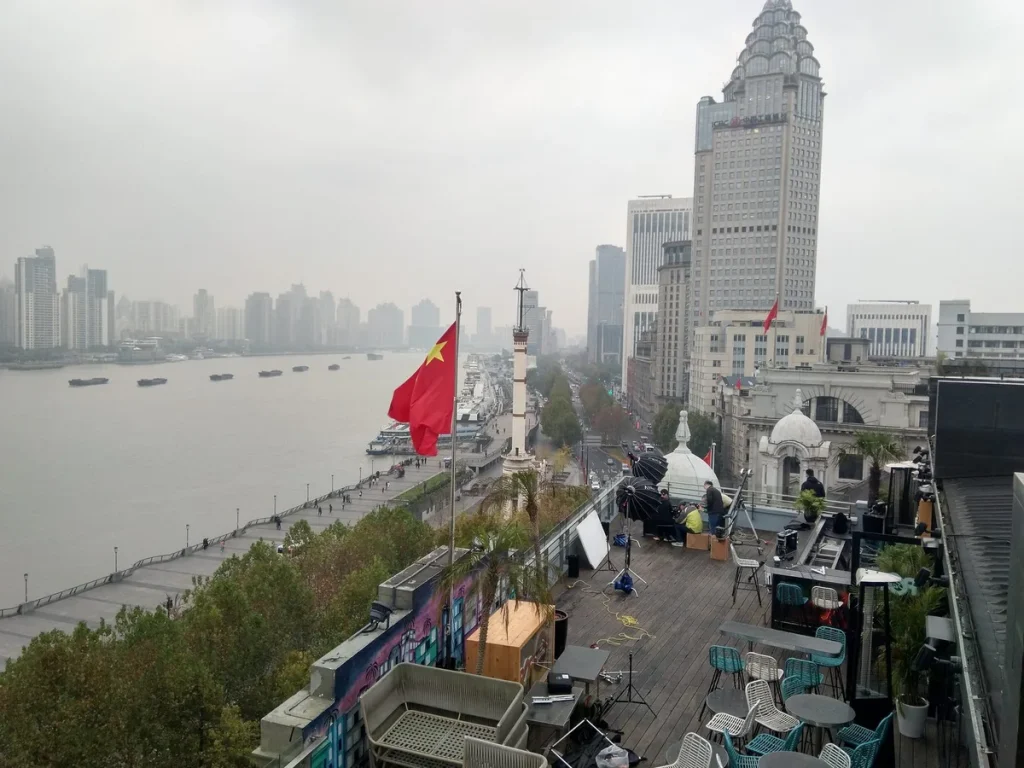
A camera operator in Shanghai is the practical hire for most corporate, broadcast and event work: someone who arrives with a professional package, understands framing under pressure, and can be trusted to get the shot without a full unit behind them. We place English-speaking operators — with or without kit — for single days and multi-week schedules across Shanghai.
When an Operator Is the Right Hire
If you have a director or producer travelling with a clear plan, an operator is usually all you need on camera. If the look itself has to be designed from scratch and lit, you want a director of photography instead. The distinction saves real money in both directions — over-hiring for a straightforward conference is as wasteful as under-hiring for a commercial.
The most common Shanghai briefs are corporate interviews and b-roll, conference and event coverage, factory and site walkthroughs, news and current-affairs inserts, and second camera on a larger unit.
Operating in Crowds, and What That Means for Kit
The locations clients ask for in Shanghai are the busiest places in the city. The Bund promenade, Nanjing Road and Xintiandi are dense with people for most of the day, and that pushes the operating choice towards handheld or a compact gimbal rather than a spread of legs and a matte box. A big rig in that environment does not just attract attention from the public, it attracts attention from property management. Operators who shoot these locations regularly work small, move quickly, and get the shot before the setup becomes an event.
You will often pair this with Shanghai Film Fixer on the same Shanghai schedule.
Multi-Camera and Live Events in Shanghai
Conferences, launches and awards in Shanghai are normally covered with two or three operators working to a single lead, with matched picture profiles and jam-synced timecode so the edit lines up without guesswork. Where a venue is running its own vision mix and PA, we take clean feeds rather than duplicating them.
Local knowledge counts here. Public-space filming is coordinated through district authorities and property management, and most commercial towers, malls and metro property require their own written approval. Drone work needs CAAC clearance plus local police notification. Venues in this city vary widely in how much they will let a crew do, and knowing that before the call sheet goes out prevents an expensive morning.
Most shoots here also book Shanghai Permits & Production Services.
Lane Work in the Old Neighbourhoods
The shikumen lanes of the former French Concession and the streets around Tianzifang are narrow, uneven and roofed by plane trees, which means constantly changing dappled light and very little room to back up. Wide glass and a stabilised body are worth more there than a long zoom. These are also residential streets: an operator who keeps the footprint small and the crew quiet gets a far easier morning than one who blocks a lane, and that is as much a scheduling decision as a technical one.
Operating in Shanghai Locations
Clients most often ask for the Bund waterfront, Lujiazui towers, the former French Concession’s plane-tree streets, Suzhou Creek warehouses, Xintiandi shikumen lanes and the newer Pudong business parks. Each carries a different operating reality — crowd density, restricted tripod use, low light, or property management with its own rules.
October and November are the most reliable, with April and May a close second. Plum rain in June, humid heat through August. For exterior-heavy schedules that window is worth designing around rather than working against.
If the brief widens, Shanghai Videographer is the usual add-on in Shanghai.
Working with a Travelling Director
A large share of operator bookings in Shanghai are made by a director or producer flying in for two or three days. That arrangement works well, but it depends on the operator being briefed properly before landing — a shot list or reference reel, the intended aspect ratio and frame rate, and an honest sense of how much coverage the edit actually needs.
The failure mode is arriving with a plan built for a different city. Distances, permit expectations and how much a venue will tolerate all vary, and a local operator will tell you which parts of the schedule are unrealistic while there is still time to reorder the day.
Where the director does not speak the local language, we add a bilingual producer rather than expecting the operator to run two jobs at once.
Frequently Asked Questions
Can you operate a gimbal in the metro or in a shopping mall?
Both are private property with their own written permission process, and both routinely decline. We plan mall and metro material as a separate approval track well before the shoot rather than assuming it on the day.
Do your Shanghai camera operators come with equipment?
Most own a professional camera, lens and tripod package, and many carry basic audio and lighting. If your brief needs a specific body or a larger order we quote crew and kit separately.
Do you provide an operator who can also handle a second camera on interviews?
Yes, and it is the common setup here — a DP lighting and shooting the A camera with an operator on B for the cutaway size. It is usually the cheapest way to protect an interview day against a single-angle failure.
Can you supply two or three operators for an event?
Yes. Multi-camera event coverage is routine — matched profiles, jam-synced timecode and a single lead operator coordinating the floor.
What Else You May Need in Shanghai
For a fuller crew in Shanghai, Shanghai Factory Filming is the natural next call. See also Shanghai Camera Rental for the wider Shanghai production picture.
Tell us the dates, the locations and what the finished piece has to do, and we will come back with names and a clear quote. Reach the production desk at [email protected].