2026年8月11日
Chengdu Cinematographer | Director of Photography for Hire
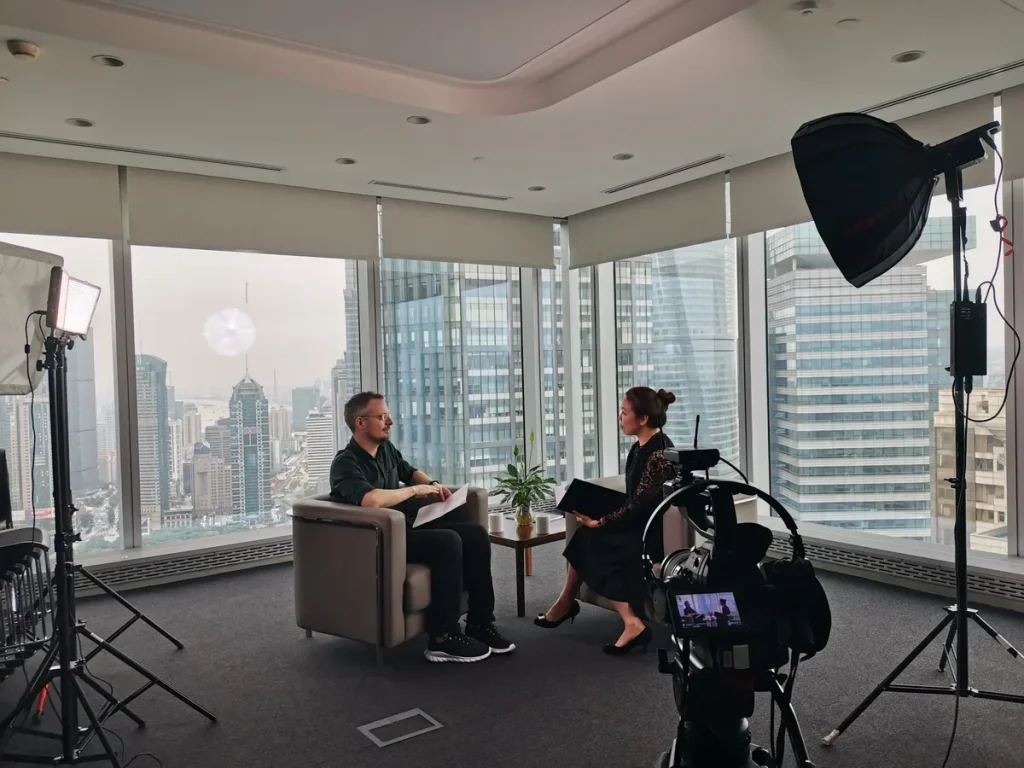
Booking a cinematographer in Chengdu is a different decision from booking a camera operator. A DP owns the look — exposure, contrast, lens language and how the light behaves on the day — and carries responsibility for the image from the first recce through to what the colourist receives. We place English-speaking directors of photography with international agencies, broadcasters and brands shooting across Chengdu, either as a single hire or heading a full local unit.
What a Chengdu Cinematographer Actually Takes On
The DP translates a brief into a shooting plan: how each scene is lit, which lenses carry the story, where the camera sits and moves, and what the grade will need later. On arrival that means walking locations with you, flagging what will and will not work, and building a lighting and camera order that matches both the ambition and the budget.
On a directed commercial the DP works to the director’s boards. On documentary and corporate work in Chengdu the role is usually broader — often shooting operator as well, making lighting calls in real time, and protecting continuity across days when the schedule shifts.
Where a client already has a strong internal creative team, we are frequently asked for a DP who can execute precisely to a supplied look book rather than impose one. Both briefs are normal; tell us which you are running and we shortlist accordingly.
Production Logistics in Chengdu
Chengdu is a western hub with good roads and rail but a congested inner ring, so allow buffer for cross-town moves; the panda base, the teahouses and the tech parks are the common targets, and a fixer handles local approvals. Tianfu (TFU) and Shuangliu (CTU) both serve the city.
Most shoots here also book Chengdu Bilingual Fixer.
Lighting Approach in Chengdu
The wide avenues and modern towers of the centre, the pandas of the Chengdu Research Base, the teahouses and laneways of the old town, the Sichuan Opera face-changing performances, and the green peaks of Mount Qingcheng and Mount Emei within reach — these are the locations clients ask for, and each has its own lighting problem. 50Hz mains means 25p or 50p is the safe default; at 24p keep the shutter at 1/50 or a 172.8-degree angle to avoid flicker from fluorescent and LED lighting, which matters more than usual when practicals and screens are in shot.
Mains here run at 220V / 50Hz, Type A, I and G sockets (bring adaptors). It is a small detail that decides whether a lighting order arrives workable or needs transformers and distribution rethought on the morning of the shoot, so it gets confirmed during prep, not on the day.
In practice most Chengdu shoots are a negotiation between available light and what a small package can shape. LED panels and tubes with battery options cover the majority of interview and corporate work; larger HMI or LED units come in when you are fighting daylight through glass, which in this city you often are.
See also Chengdu Permits & Production Services for the wider Chengdu production picture.
The Look and the Light in Chengdu
Chengdu is softer and greener than the coast – teahouse lanes, the pandas and the snow peaks of Mount Qingcheng on the horizon; the light is humid and diffuse, with moody winter fog. Spring and autumn are best; summer is hot and humid, and the city’s many studios and hotels give controlled interiors.
Crewing Around the DP
A cinematographer alone is rarely the whole answer. Depending on scale we build outward to a focus puller, gaffer and spark, grip, and a DIT when the day generates enough data to need managing. For a two-person documentary day the DP may self-operate with a single assistant.
Chengdu offers a large and experienced crew and rental market; the major cities hold camera, lighting and grip houses, so most productions can be sourced locally without flying kit in, so scaling up is normally a question of notice rather than availability. Give us dates early for peak periods and the shortlist stays open.
For a fuller crew in Chengdu, Chengdu Camera Crew is the natural next call.
Sectors We Shoot For in Chengdu
Client work here concentrates around tourism and lifestyle, food and beverage, technology, automotive and documentary. Each brings its own constraints — restricted areas, confidentiality, machinery that cannot be stopped, or executives with a hard thirty-minute window — and an experienced local DP plans the day around them instead of discovering them at the door.
Frequently Asked Questions
What power and frame rate should I plan for in Chengdu?
Chengdu runs on 220V at 50Hz with Type A, I and G sockets, so adaptors are essential. The safe rates are 25p or 50p; at 24p keep the shutter at 1/50 or a 172.8-degree angle to avoid flicker.
What is the difference between a cinematographer and a camera operator in Chengdu?
The cinematographer designs and owns the image — lighting, lens choice and exposure — while the operator executes framing and movement. On smaller Chengdu shoots one person often does both; on commercials they are separate roles.
Can you shoot an English-speaking production in Chengdu?
Yes – Chengdu’s food, lifestyle and tech sectors work in English with international partners, and a bilingual fixer manages permits and location deals; crews here are comfortable with brand and documentary formats.
Do your Chengdu DPs speak English?
Yes. Every director of photography we place in Chengdu works in English, and where a shoot needs deeper local negotiation we pair the DP with a bilingual producer or fixer.
What Else You May Need in Chengdu
If the brief widens, Chengdu Camera Rental is the usual add-on in Chengdu. You will often pair this with Chengdu Camera Operator on the same Chengdu schedule.
Share the schedule and what you need to walk away with, and we will come back with the right people for it and a straightforward quote. Reach the production desk at [email protected].