2026年8月11日
Tianjin Interview Filming | Corporate Interview Crew
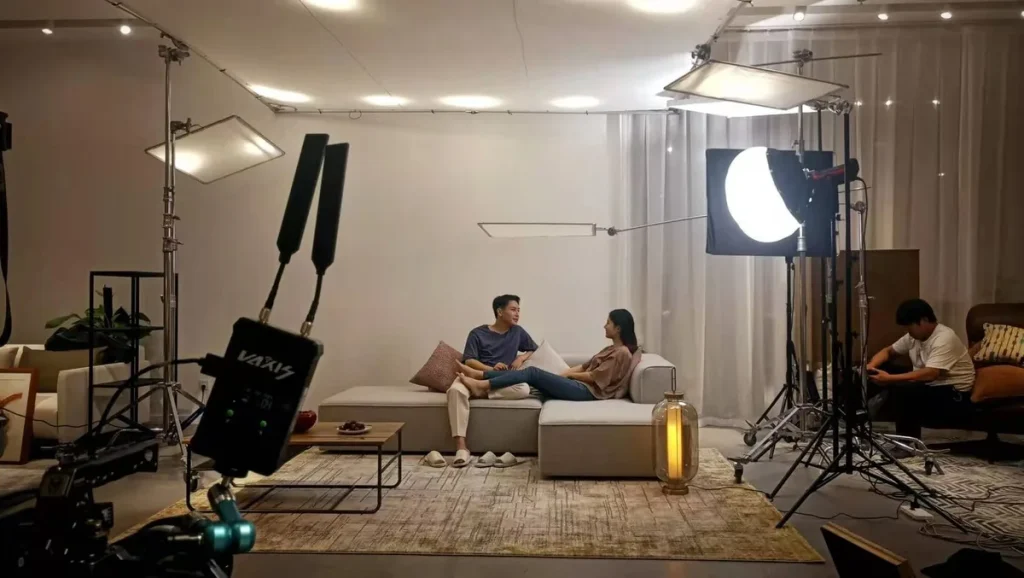
Interview filming is the single most requested job in Tianjin — executive profiles, customer testimonials, expert commentary for documentary, recruitment films and internal communications. The format looks simple and is unforgiving: one bad room, one noisy air-conditioning unit or one unflattering key light and the material is compromised before anyone speaks.
What an Interview Shoot in Tianjin Involves
A standard day is a crew of two or three, a controlled room, and anywhere from one to eight contributors. We arrive early to rig, run the first setup before the first interviewee is due, and keep turnaround between contributors short so an executive’s thirty-minute window is spent talking rather than waiting.
Where the subject speaks a language your director does not, we build the interpreter into the plan properly — separate audio track, agreed question flow, and a briefing beforehand so the interpreter knows they are there to translate rather than to summarise.
Production Logistics in Tianjin
Tianjin sits 30 minutes from Beijing by high-speed rail, so kit and crew can be shared across both cities; the concession-quarter streets, the Haihe riverfront and the Binhai port are the targets, and a fixer coordinates the heritage and port permissions. Binhai (TSN) is east of the centre.
You will often pair this with Tianjin Film Fixer on the same Tianjin schedule.
Lighting and Sound for Interviews
The reliable build is a soft key slightly off axis, gentle fill or a bounce, and separation on the background so the subject does not merge into the wall behind them. Where a window is available it is often the best key in the room, provided the schedule accounts for the sun moving.
Audio is a lavalier and a boom recorded as separate tracks. Air conditioning and building services are the recurring enemies indoors, and each city adds its own layer. In Tianjin, Tianjin reads calmer than Beijing; the concession quarter and the riverfront are quiet, though the port and the ring road carry industry noise, and studios are sealed.
Backgrounds deserve more attention than they usually get. A meeting room with a branded wall, a working office with depth behind the subject, or a clean neutral setup are all defensible choices — but choosing one during prep is far better than choosing it while the contributor waits.
For a fuller crew in Tianjin, Tianjin Permits & Production Services is the natural next call.
The Look and the Light in Tianjin
Tianjin’s signature is its preserved European concession streets against the modern Yujiapu CBD, with a temperate, often hazy light that suits period and corporate looks; the riverfront at blue hour is the strong frame. Spring and autumn are best; summer is hot and humid, winter cold and dry.
Locations and Access in Tianjin
Most interviews here happen in client offices, hotel meeting rooms or rented studio space. Offices are free and convenient but often acoustically poor and visually cluttered. Hotels are predictable but rarely allow the air conditioning to be switched off. A small studio removes both problems and is worth pricing when the material has a long shelf life.
Mainland filming is coordinated through a locally registered production company; public spaces, transit hubs and landmarks need local management permission, and drone flights need CAAC approval with a designated pilot. A fixer handles the paperwork — relevant if any part of the day moves outside for cutaways or a walk-and-talk.
If the brief widens, Tianjin Camera Crew is the usual add-on in Tianjin.
Preparing Contributors
Most people being interviewed in Tianjin are not performers, and the quality of the answer usually depends on what happened before the camera rolled. Sending questions or themes in advance, agreeing whether the contributor speaks in their own language or in English, and being clear about how long they are needed all make a measurable difference.
Wardrobe is worth one line in the brief: no tight patterns, no logos the legal team will object to, and a spare top if the schedule runs across a warm day. On the day itself, five minutes of unrecorded conversation before the first question is the fastest way to get a usable second answer.
Where contributors are senior executives, the constraint is almost always time. We rig fully before they arrive so the booked window is spent recording rather than fitting a microphone.
Frequently Asked Questions
What power and frame rate should I plan for in Tianjin?
Tianjin runs on 220V at 50Hz with Type A, I and G sockets, so adaptors are essential. The safe rates are 25p or 50p; at 24p keep the shutter at 1/50 or a 172.8-degree angle to avoid flicker.
How many interviews can you film in one day in Tianjin?
Comfortably four to six in a single location with a shared setup. Moving between buildings or changing the look for each contributor reduces that significantly.
Can you shoot an English-speaking production in Tianjin?
Yes – Tianjin’s manufacturing and port sectors work in English with international partners, and a bilingual fixer handles permits and crews; its proximity to Beijing makes the larger capital pool available too.
Do you provide an interpreter for interviews?
Yes. We can supply a bilingual producer or a dedicated interpreter, kept on a separate audio track so the edit can use the original answer.
What Else You May Need in Tianjin
Most shoots here also book Tianjin Camera Rental. See also Tianjin Sound Recordist for the wider Tianjin production picture.
Send through the shooting dates and the brief for Tianjin and we will reply with a shortlist and a price that is broken down properly. Reach the production desk at [email protected].