2026年8月14日
Fukuoka Gaffer | Lighting Director & Film Electrician
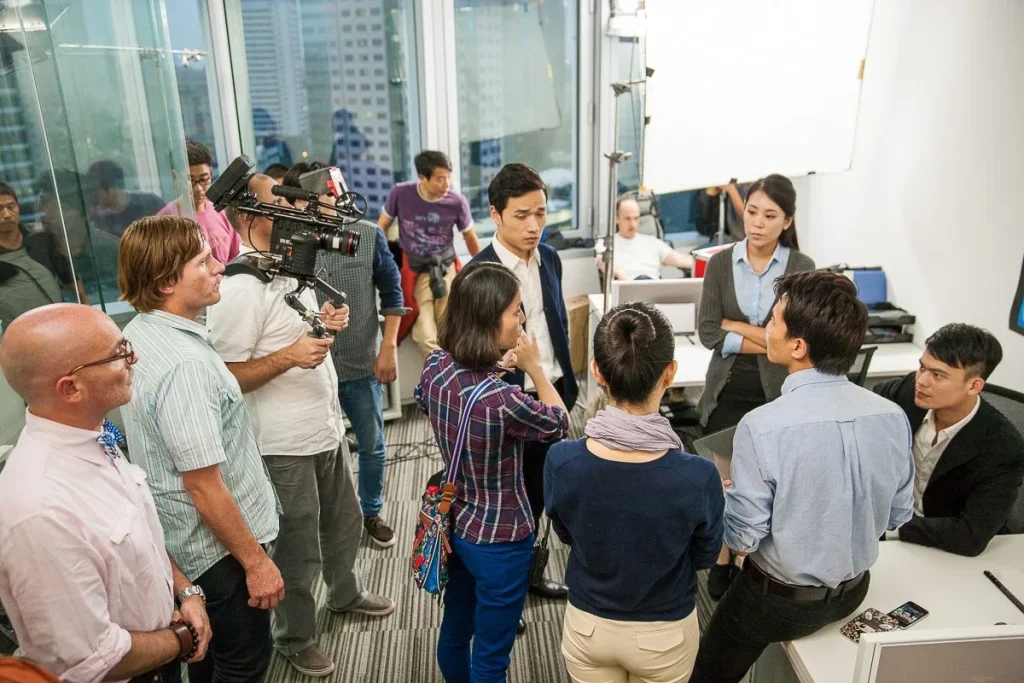
A gaffer in Fukuoka heads the lighting department – the person who turns the director of photography’s intent into a working rig, plans distribution and keeps the set safe and power-balanced. For anything beyond a small interview kit we recommend one, because the constraint on most shoots here is power and access, not the kit itself. We brief the gaffer from the script and the location recce so the rig serves the schedule, not just the shot list, and the first setup on the day lands right – that prep is what separates a smooth lighting day from a reactive one.
What a Fukuoka Gaffer Actually Does
The gaffer runs the lighting department: they read the DP’s lighting plan, decide what to rig and where, manage distribution and make sure every fixture is safe and balanced on the available power. On smaller jobs they may also spark; on larger ones they lead electrics and a best boy.
In Fukuoka that role also means knowing the local venues and what their power and rigging rules actually allow, which saves a half-day of re-rigging more often than crews expect.
Power and Distribution in Fukuoka
Mains in Fukuoka run at 100V at 60Hz, Type A and B sockets. That single fact sets your distribution plan, whether travelling fixtures need transformers, and how many units you can land on a domestic circuit before something trips.
Fukuoka sits on Japan’s 60Hz western grid, so 24p and 30p stay clean while 25p can shimmer under older fluorescents – confirm on a grey card during the tech scout. Building lighting is the usual flicker culprit, so testing at the real frame rate during prep beats fixing it in post.
For a fuller crew in Fukuoka, Fukuoka Film Fixer is the natural next call.
Lighting the Fukuoka Looks Clients Ask For
The recurring Fukuoka requests are the harbour and the modern towers of the bay, the yatai food-stall nights, the temples and the nearby mountains and beaches, and controlled brand looks built around port-city warmth. Glass-heavy interiors need negative fill more than another source; older spaces often need the practicals replaced rather than overpowered; exteriors at magic hour need a rig that strikes fast.
Fukuoka filming permits run through the Fukuoka Film Commission and the ward offices; public spaces, the harbour and landmarks need sign-off, and drone flights need civil-aviation approval, and a lighting build on a pavement or plaza almost always escalates the permit conversation – worth raising early.
If the brief widens, Fukuoka Permits & Production Services is the usual add-on in Fukuoka.
Grip, Stands and Rigging
Grip is the half of a lighting order people forget. Flags cut spill, floppies control bounce off a white ceiling, frames with diffusion turn a hard source into something usable on a face, and clamps get a fixture where a stand will not reach.
Work at height, truss or ceiling rigging, or anything overhead needs the right hardware and someone qualified to place it; venues in Fukuoka are increasingly strict about this and turning up without it is a common reason a rig gets refused.
Crew and the Rest of the Department
Fukuoka offers a deep, bilingual crew and rental market with camera, lighting and grip houses in the city and access to the wider Kyushu talent pool, so pairing a gaffer with a spark and a best boy is usually straightforward given reasonable notice. Bring the gaffer in at prep, not on the shoot day – the distribution and rigging plan is cheaper to design on paper than to discover onset.
If the package is large or includes HMI, a generator and a lighting console may be part of the conversation; the gaffer scopes that during the tech scout.
You will often pair this with Fukuoka Videographer on the same Fukuoka schedule.
Scheduling and Logistics
Fukuoka is compact with an airport near the centre and good rail, so location moves are short but the bay-side load-ins need timing. Lighting is bulkier and slower to move than camera kit, so delivery windows, get-in access (loading bay, lift size, stair-only floors) and power drops are worth confirming with the venue before the truck is booked.
Fukuoka has mild seasons; cherry blossom arrives early in late March, summers are hot and humid with a typhoon window in late summer, and winters are cool, which affects exterior scheduling and how much contingency the lighting plan needs.
Frequently Asked Questions
What does a gaffer charge for a day in Fukuoka?
Rates scale with the size of the department and the kit – a gaffer alone is a different number from a gaffer with a spark, a best boy and a truck. Send the lighting plan and we will come back with a broken-down quote.
Do you provide a lighting console and generator?
For larger builds, yes – a console and a generator are part of the standard conversation once the rig goes beyond a few heads. The gaffer scopes this during the tech scout.
Can the gaffer work with my own DP in Fukuoka?
Yes – a gaffer is hired to realise the DP’s plan, not replace it. Sharing the look book and the shot list before the shoot day keeps the rig fast and on-brief.
Do Fukuoka crews work in English?
Yes – Fukuoka crews and rental houses work in English as well as the local language, so international briefs move without a language gap.
Booking the Wider Crew
See also Fukuoka DIT for the wider Fukuoka production picture. Most shoots here also book Fukuoka Video Production.
If you have dates in mind, send them over with a sense of the deliverable and we will put a crew and a quote in front of you. Reach the production desk at [email protected].