2026年8月11日
Tokyo Videographer | Corporate, Documentary & Event Video
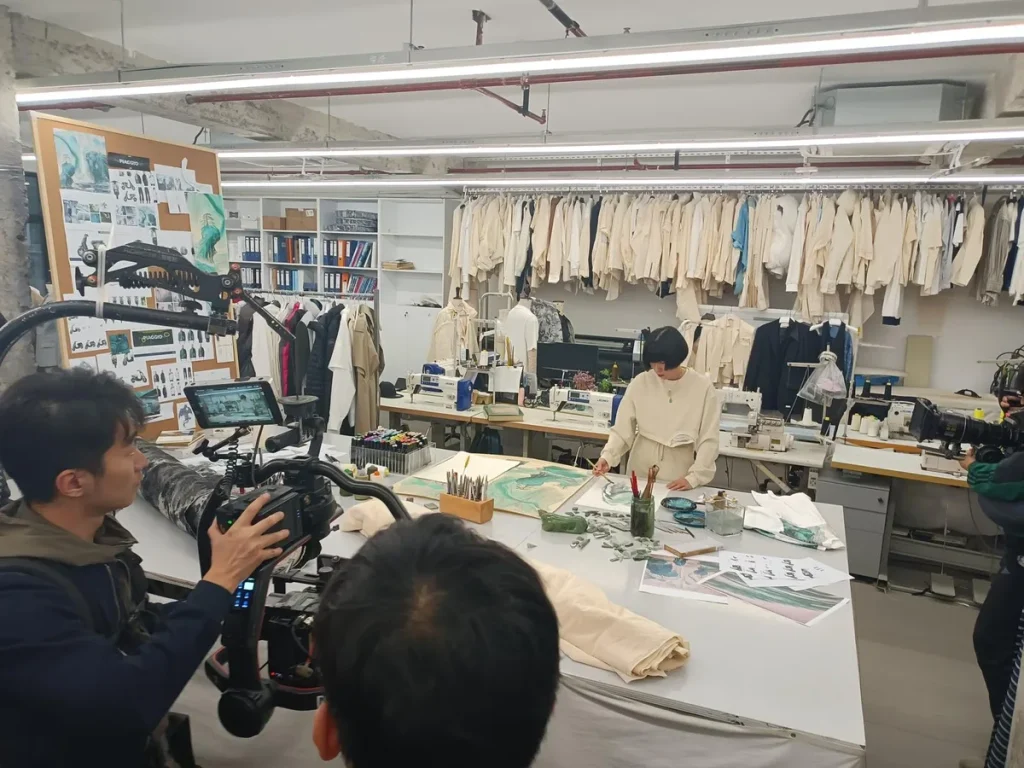
A videographer in Tokyo shoots the moving image – corporate films, interviews, documentaries, events and social content. We supply a shooter (or a small crew) who knows the city’s light, locations and logistics, so an international brief lands without a local producer attached to every shoot day.
What a Tokyo Videographer Delivers
A videographer in Tokyo covers the production end to end for smaller jobs: directing, camera, sound and often a first edit. For a single-day corporate, interview or event piece that is usually all you need – a tight crew that moves fast and keeps the quality up.
For multi-camera or scripted work the same person scales into a small department; the point is one accountable lead who knows Tokyo and owns the result.
Capturing Tokyo’s Movement
Tokyo reads best in motion – the transit lines, the neon arteries of Shinjuku, the quiet residential grids of Setagaya. A gimbal operator and a second body cover the energy without blocking commuters; stations and platforms are permit-controlled, so transit shots need approval and a fixer who knows the station managers. Build buffer time – Tokyo moves on its own clock.
If the brief widens, Tokyo Permits & Production Services is the usual add-on in Tokyo.
Cameras, Lenses and Delivery in Tokyo
Most Tokyo videography runs on full-frame cinema or hybrid bodies recording 4K, with prime and zoom options, gimbals, and a monitor on the build. Delivery is usually ProRes or H.264/H.265 masters plus web cuts.
If the platform is social, web or broadcast, the recording format and the colour pipeline are set to match – tell us the final destination and we grade accordingly. Media is sized to the day’s data rate, not a guess.
For a fuller crew in Tokyo, Tokyo Camera Crew is the natural next call.
Sound, Power and Flicker on Location in Tokyo
100V / 50Hz in the Kanto region — the lowest mains voltage of any major production city, so power draw needs checking before you land, so chargers, V-mount or NP-F bricks and any travelling kit are checked against that before they ship. For doc and event work, plan power around the locations you will actually be in.
Because this is motion, Eastern Japan runs at 50Hz, so 25p or 50p is safest; if the schedule moves west to Osaka the grid switches to 60Hz and the flicker maths changes with it – it is the usual cause of banding under LED or fluorescent venues, so a quick frame-rate test during prep beats fixing it in post.
Corporate and Tech Filming in Minato and Chiyoda
The Minato, Chiyoda and Chuo wards hold most corporate and tech HQs, with controlled lobbies and exacting security. Interviews are usually shot inside with a clean backdrop; exteriors need a property sign-off. Tokyo crews are used to same-day corporate turnarounds, so a clear shot list and a pre-lit interview kit keep the day fast.
You will often pair this with Tokyo Line Producer & Production Manager on the same Tokyo schedule.
The Tokyo Looks Clients Want
The briefs that come up again and again in Tokyo are Shibuya and Shinjuku at night, Ginza’s retail frontage, Asakusa and Senso-ji, the Sumida riverfront, Toyosu market, Odaiba’s waterfront and the quieter residential streets of Setagaya and Yanaka. Corporate and interview work wants clean, controlled frames; documentary wants the city’s texture and movement; events want energy without blown highlights.
Any shoot that spills onto a public pavement or plaza in Tokyo usually opens a permit conversation worth starting during prep, so access is scoped before the crew is booked.
Permits and Filming Access in Tokyo
Road use for anything beyond a handheld camera goes through the local police station, individual wards handle parks and public spaces, and private property is strict about written consent. Shibuya Crossing in particular is far harder to shoot legitimately than its footage suggests. A videographer on a multi-location day needs approvals lined up in advance – public spaces, transit and landmarks each have their own process, and a fixer handles the paperwork so the crew shoots instead of negotiating.
For interiors, the property’s own sign-off often matters more than the city permit, so confirm both before the truck is booked.
Crew, Kit and Local Sourcing in Tokyo
a highly professional crew market where scheduling is precise and bilingual coordination is the main bottleneck, so adding a sound recordist, a second operator or a DIT for multi-cam days is usually straightforward given notice. Most camera, lighting and grip kit can be sourced locally without flying it in.
If the schedule is tight, build the assistant and the media plan in from the start; it is cheaper than a backlog at the end of the day.
Frequently Asked Questions
Can you film in Tokyo stations and transit?
Yes with permission – stations and platforms are controlled by the rail operators and need a fixer to coordinate. We handle the application and the shoot window.
Do Tokyo videographers work in English?
Yes – Tokyo videographers, crews and rental houses work in English as well as the local language.
What about drone filming in Tokyo?
Drones are tightly restricted over the city and need civil-aviation approval plus a no-flight check against airports and populated zones. We scope it case by case.
What is included in a videography package?
A shooter with camera, sound and a first edit as standard; add a second operator, a sound recordist or a DIT for bigger builds. Send the brief and we size the crew.
Planning the Rest of the Shoot
See also Tokyo Photographer for the wider Tokyo production picture. Most shoots here also book Tokyo Bilingual Fixer.
Tell us the dates, the locations and what the finished piece has to do, and we will come back with names and a clear quote. Reach the production desk at [email protected].